tech & cultureil y a 3 mois
Modibo Soumaré
Équipe SenDiaspora
Introduction
The revival of African languages requires not only cultural will but also technological innovation. Two dominant approaches—Generative AI and Rule-Based AI—offer different pathways. Scholars such as Ayo Bamgbose (1991) have long emphasized the need for systematic codification, while modern AI introduces new possibilities.
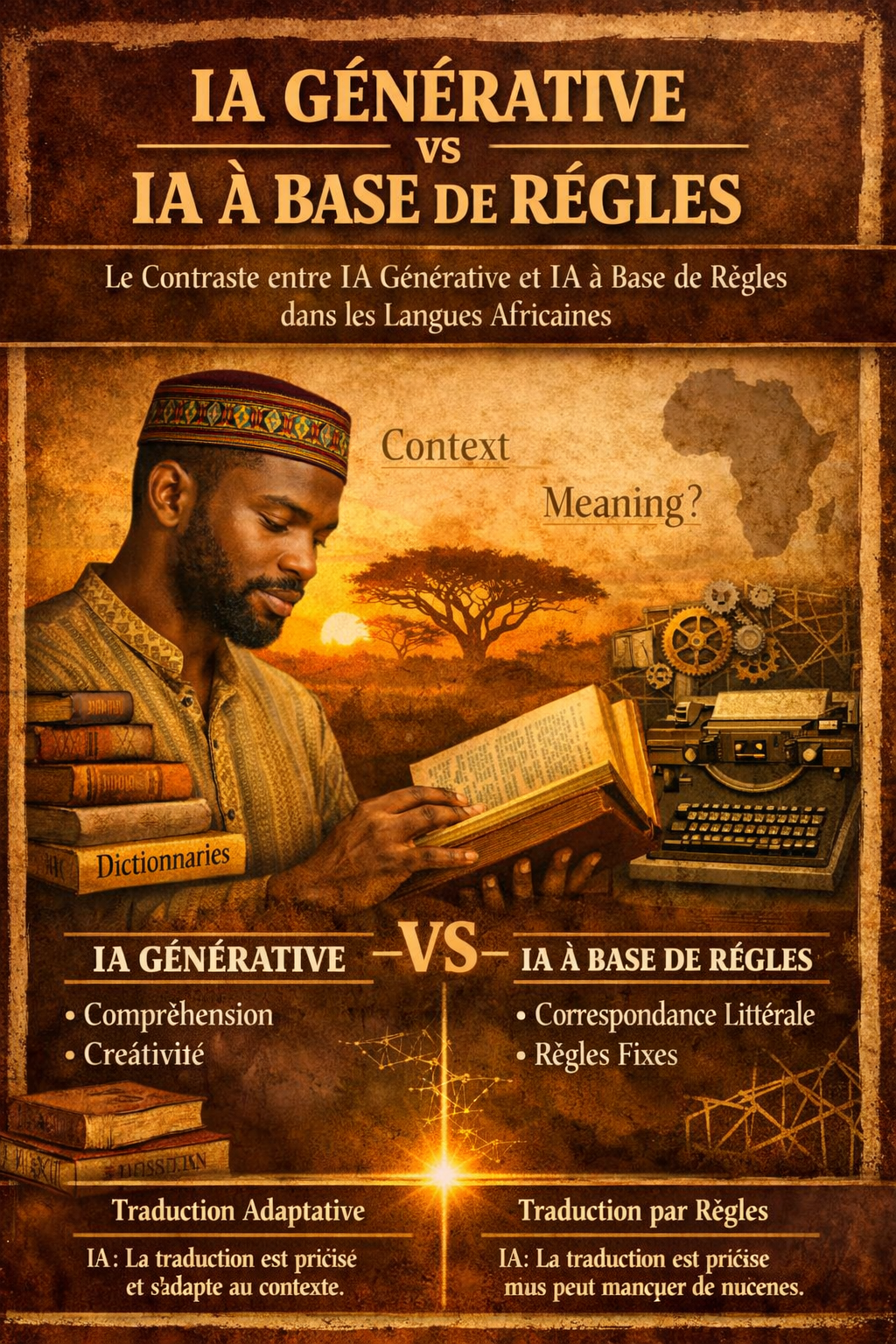
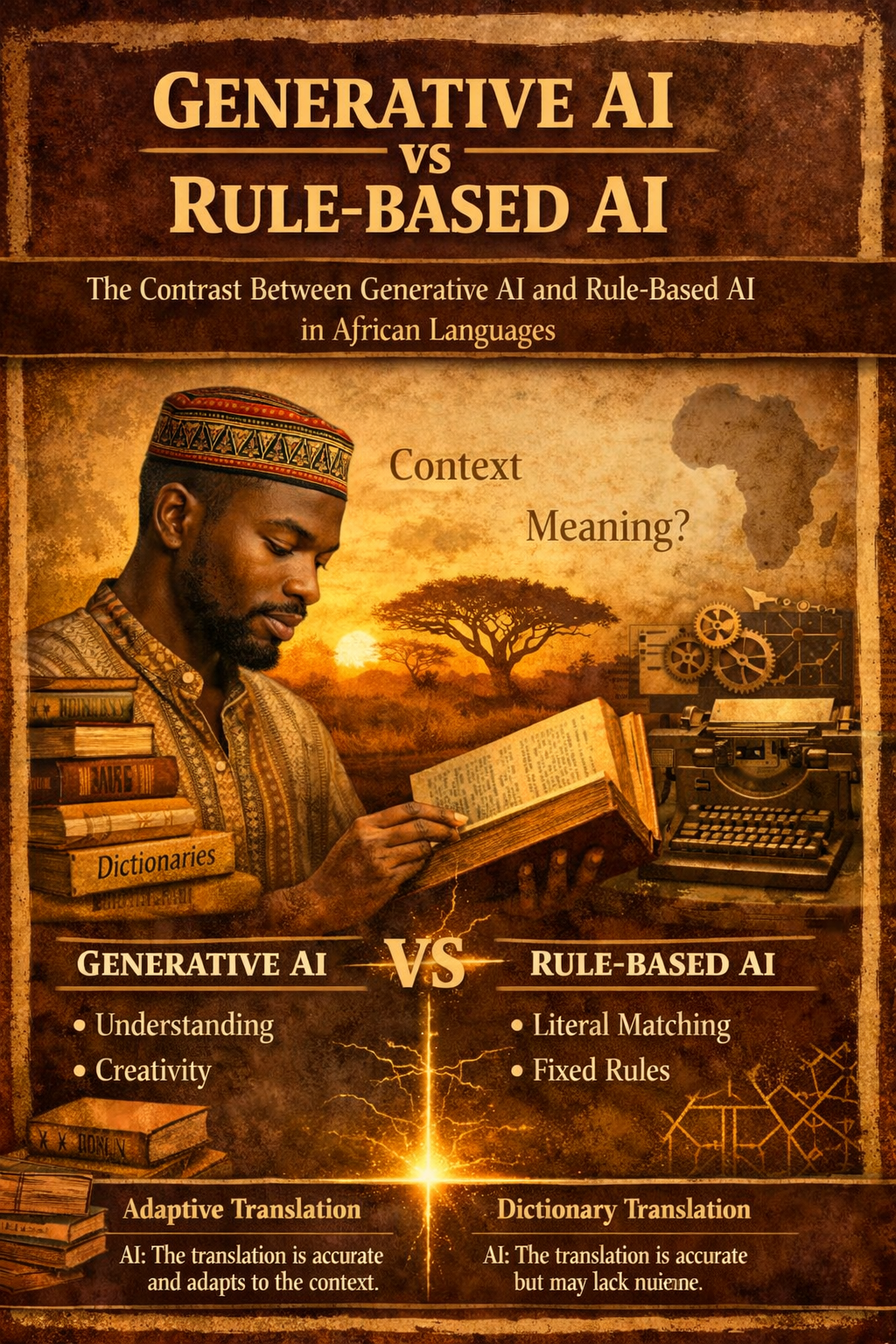
Generative AI: Promise and Pitfalls Generative AI models, trained on vast datasets, can produce translations, lexicons, and even creative text in African languages. Their strength lies in adaptability and scalability. However, as Herman Batibo (2005) warns, rapid expansion without cultural grounding risks distortion of meaning and loss of nuance.
Rule-Based AI: Precision and Limitations Rule-based systems rely on explicit grammatical rules and dictionaries. Kay Williamson’s work on Nigerian languages illustrates the importance of carefully documented structures. These systems ensure accuracy but are slow to scale and require extensive human input.
Hybrid Approaches Cheikh Anta Diop argued that African languages must be scientifically studied to reclaim their place in history. A hybrid AI approach—combining generative flexibility with rule-based rigor—may embody Diop’s vision by balancing innovation with scholarly precision.
Conclusion AI is not a replacement for human scholarship. It is a tool. The rebirth of African languages will depend on how communities, linguists, and technologists collaborate to ensure that digital tools reflect authentic voices.
Bibliography
Bamgbose, A. (1991). Language and the Nation: The Language Question in Sub-Saharan Africa. Edinburgh University Press.
Batibo, H. M. (2005). Language Decline and Death in Africa: Causes, Consequences and Challenges. Multilingual Matters.
Diop, C. A. (1974). The African Origin of Civilization: Myth or Reality. Lawrence Hill Books.
Williamson, K. (1989). Nigerian Pidgin: Some Introductory Notes. University of Port Harcourt.